
LEARN
How to Read Class E Airspace on a Sectional Chart
· Updated
Class E is the controlled airspace you will spend the most time in as a private pilot, and it is also the airspace examiners like to hide on a sectional. There is no solid blue or magenta ring with a letter in it. The chart tells you the floor with a dashed line or a soft color fade, and the answer changes depending on which side of that fade you are on.
If you can point at a chart and say where Class E starts — the surface, 700 feet AGL, or 1,200 feet AGL — you can answer the oral question and plan a low-altitude VFR leg without guessing.
What Class E actually is
Class E is controlled airspace that is not Class A, B, C, or D. “Controlled” means air traffic control services are available. It does not mean you need a clearance, a discrete code, or two-way radio just to fly VFR through it.
Most Class E tops out at, but does not include, 18,000 feet MSL, where Class A begins. It also exists above FL600. For a private pilot checkride, the question that matters is the floor: where Class G ends and Class E begins.
That floor is charted three ways you should be able to name from memory.
Class E to the surface: dashed magenta
A dashed magenta line around an airport means Class E goes all the way to the ground inside that line.
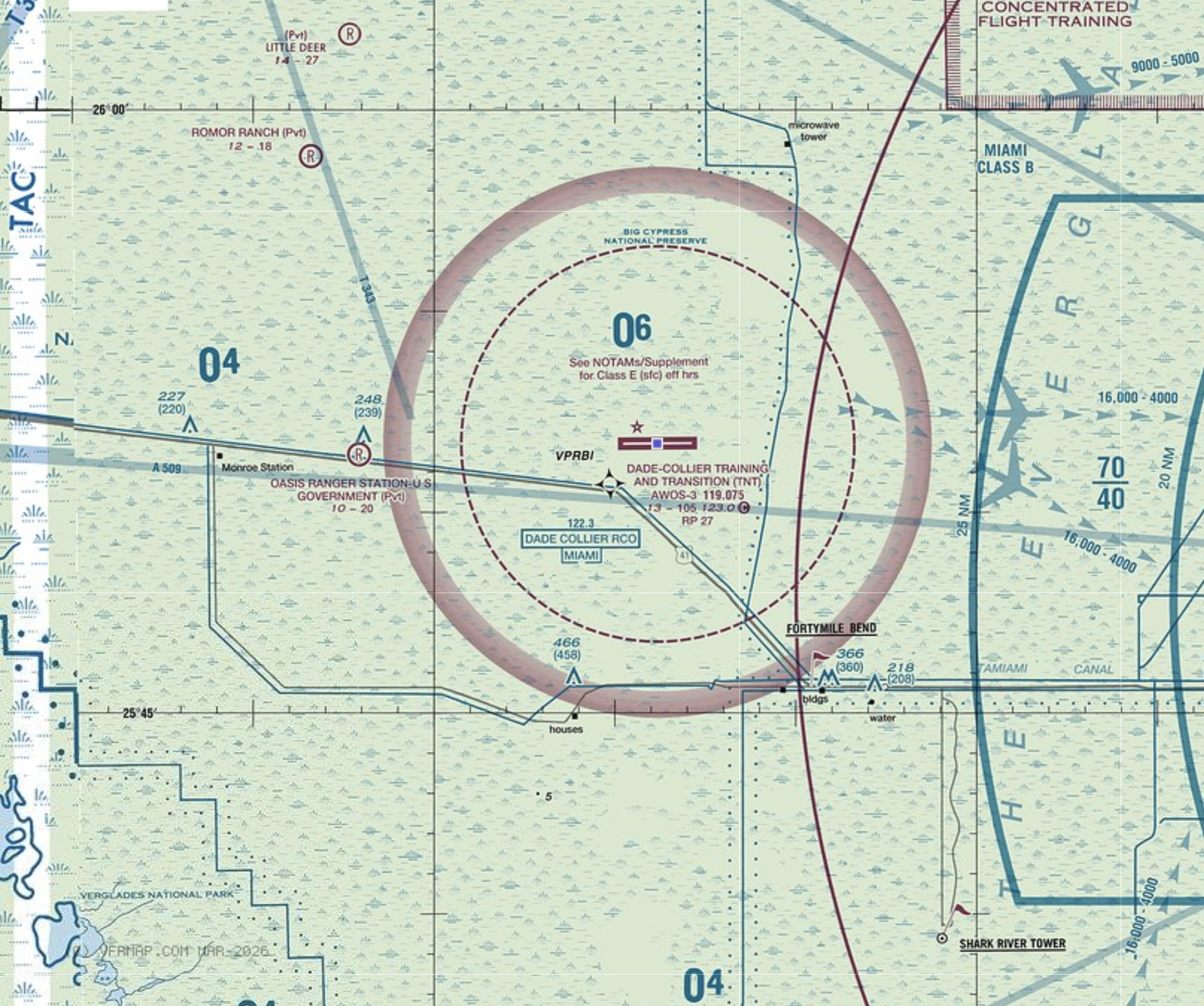
Do not confuse it with Class D. Class D surface areas are dashed blue. Same dash pattern, different color, different rules. Blue means a tower. Magenta means Class E, usually an airport with an instrument approach and no operating control tower, or a surface extension off a busier airport.
Inside surface-based Class E you can still fly VFR without a clearance, as long as you have the basic VFR weather minimums. Those minimums are stricter than Class G near the ground: 3 statute miles visibility, and you must stay 500 feet below, 1,000 feet above, and 2,000 feet horizontally from clouds.
Two details examiners add once you get the symbol right:
- Special VFR is available in surface Class E, but only with an ATC clearance. At night, special VFR also requires an instrument rating and an instrument-equipped airplane.
- Surface Class E depends on weather reporting and communications to the surface. If those services are out of service, the surface area can revert to Class G. Check NOTAMs before you count on the airspace you saw in the chart supplement yesterday.
The magenta vignette: Class E starts at 700 feet AGL
The fuzzy magenta band around many airports is a vignette, not a hard border you cross at one altitude. Inside the area that band encloses, Class E begins at 700 feet AGL. Outside it, the floor is generally 1,200 feet AGL.
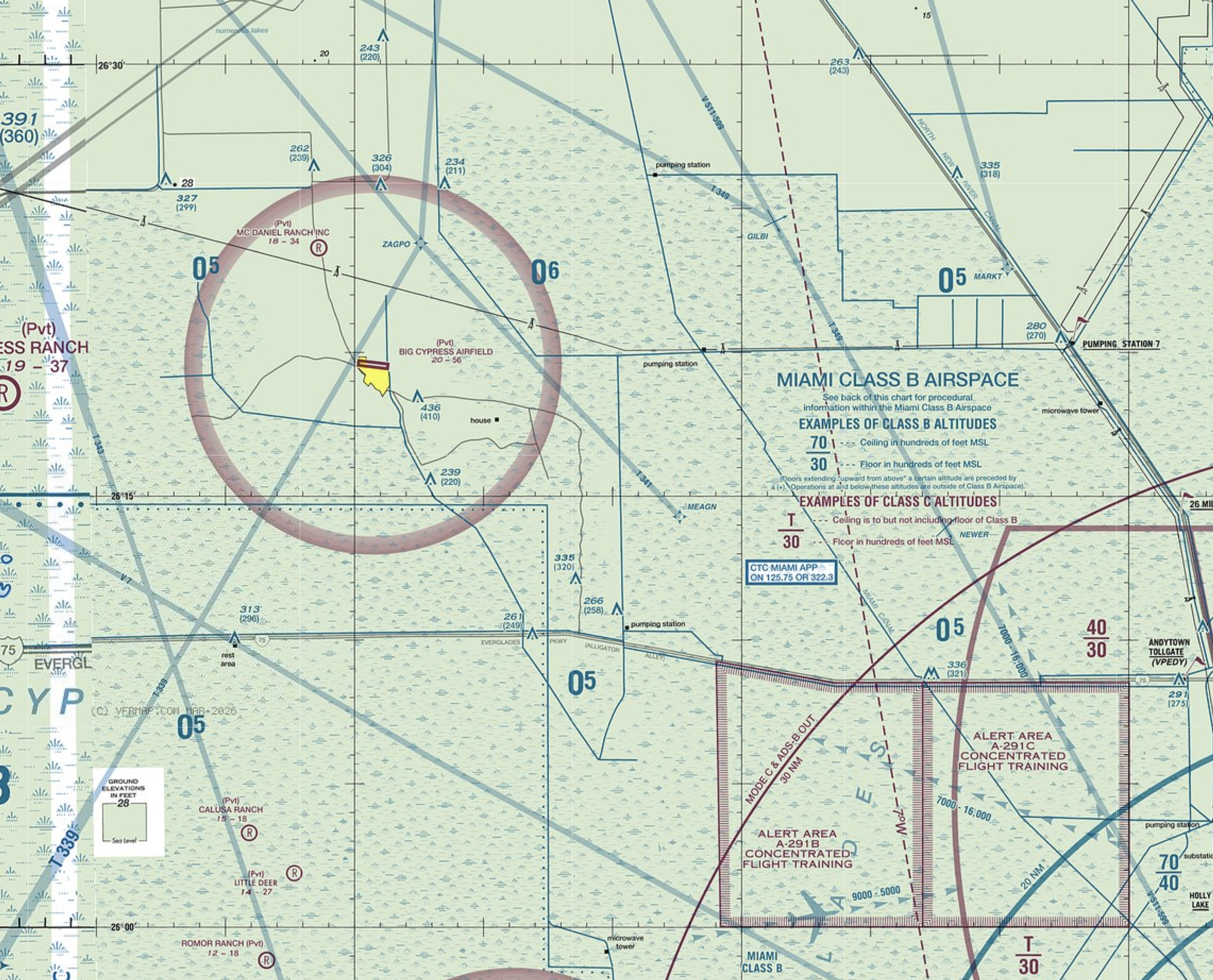
Read the fade from the airport outward. The vignette wraps the airport so instrument traffic can be in controlled airspace lower, while aircraft farther out stay in Class G a little longer. Below 700 feet AGL inside that fade, you are still in Class G. Cross 700 feet and you are in Class E, with Class E cloud clearance and visibility, even if you never talk to anyone.
That is the question behind “how far down does Class E extend in the circled area?” If the circle sits inside the vignette, the answer is 700 feet AGL, not the surface, and not 700 feet MSL.
No vignette: assume 1,200 feet AGL
Away from those fades, Class E over the continental United States normally starts at 1,200 feet AGL and goes up to, but not including, 18,000 feet MSL. The chart does not paint a big label for that. Absence of a vignette is the cue.
A blue vignette is the exception, mostly in the western United States and Alaska. Inside a blue vignette, Class E starts at 1,200 feet AGL. Outside it, controlled airspace may not begin until 14,500 feet MSL. If you only fly the East Coast you may never see one, but you should still be able to say what the blue fade means.
Federal airways (Victor airways) are their own Class E corridor: 4 nautical miles each side of the centerline, from 1,200 feet AGL up to, but not including, 18,000 feet MSL, even where the surrounding floor is higher.
A quick read of the chart
Use this order when a chart excerpt lands in front of you:
- Find the airport and the symbol closest to the area you were asked about.
- Dashed magenta around it: Class E to the surface.
- Dashed blue around it: Class D to the surface, not Class E.
- Soft magenta band: 700 feet AGL inside the vignette, about 1,200 feet AGL outside it.
- Soft blue band: 1,200 feet AGL inside, often 14,500 feet MSL outside.
- Open chart with none of the above: Class E from 1,200 feet AGL up.
Then say the weather. Below 10,000 feet MSL in Class E: 3 statute miles, 500 below / 1,000 above / 2,000 horizontal. At or above 10,000 feet MSL: 5 statute miles, 1,000 below / 1,000 above / 1 statute mile horizontal.
What changes when you enter Class E
Equipment and radio rules are where students mix Class E up with Class C or D.
You do not need two-way radio contact or a transponder solely because you entered Class E. You do need a Mode C transponder and ADS-B Out in the places 14 CFR 91.215 and 91.225 already require them, including Class E at and above 10,000 feet MSL (except when you are at or below 2,500 feet AGL) and inside the Mode C veil around Class B.
Cloud clearance is the practical change at low altitude. In Class G, daytime, below 1,200 feet AGL, you only need 1 statute mile and to stay clear of clouds. The moment the floor of Class E is under you, that becomes 3 statute miles and the 500 / 1,000 / 2,000 cloud clearance. A 700-foot floor means the rule changes a few hundred feet off the ground. That is why the vignette is on the oral. The day, night, and traffic-pattern numbers are in Class G VFR weather minimums.
Questions worth rehearsing
Say these out loud with a chart in your hand, not from a flashcard alone.
- “Show me Class E that starts at the surface.” Point at dashed magenta.
- “Show me where it starts at 700 feet AGL.” Point inside the magenta vignette, and say you are in Class G below that.
- “What is it outside the vignette?” 1,200 feet AGL, unless a blue vignette or an airway says otherwise.
- “VFR minimums below 10,000?” 3 statute miles, 500 / 1,000 / 2,000.
- “Do you need a clearance?” No, not for basic VFR. Yes for special VFR.
The interactive sectional charts walk the same symbols with the area already circled, which is the closest thing to how the question shows up on a knowledge test and on a lot of orals. Once the dashed magenta and the vignette are obvious, the rest of the Class E oral is weather minimums and knowing you are allowed to be there.